


Brain surgery
without opening the skull
Treatment of lesions within the skull with millimeter accuracy.
Treatable illnesses
The result of radiosurgery treatment may vary depending on the effect of the ionizing gamma rays directed by the device at the focal point on the tissue. The results are usually not immediate. The radiation passing through the tissue may cause changes in cell function, leading to cell death or cell division. These processes do not usually produce immediate changes but can take weeks, months, or even years to reach the desired effect, depending on the intensity of the irradiation.
Brain metastases
The cells
of these tumors can travel via the bloodstream
to distant organs, including the brain, where
they can form metastases.
Benign tumor of the auditory nerve
An acoustic neurinoma is a tumor originating in
the vestibular part of the VIII
(vestibulocochlear) nerve.
Facial nerve entrapment
Trigeminal neuralgia is an intense pain in the
area supplied by the sensory part of the V nerve
of the facial
skin, the mucous membranes of the mouth, the
teeth, the orbits of the eyes.
Brain vascular malformations
Many non-tumor vascular disorders of the brain
that, if detected (typically in the case of a
headache or stroke problem), require
treatment.
Presentation film
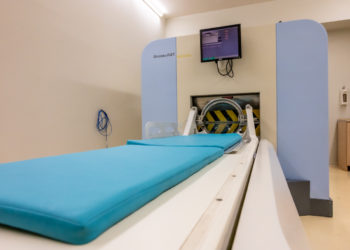
Our short film gives an insight into the important steps of radiosurgery.



State-funded same-day intervention
Brain radiosurgery is a high-efficiency
specialized treatment method that uses radiation beams to treat certain diseases inside
the skull.
The treatment consists of a single
high-dose three-dimensional irradiation to a
well-defined, small target area.
This procedure is fundamentally different from
radiation therapy, which is more widely known
in the general population and is applied
repeatedly over weeks. Radiotherapy is based
on the differential sensitivity of tumor and
healthy tissues, which throughout several
repeated applications, preferentially affect
tumor cells. In contrast, radiosurgery induces
tissue necrosis in the affected areas by a high
dose of radiation delivered in a single dose.
In certain cases, radiosurgery can replace
conventional open cranial surgery under
general anesthesia. The cases depend on the
type of the disease, whether it is defined as a
first-line treatment, whether it can be used as
an alternative to classical surgery, or potentially
as a supplemental treatment. The decision
requires a neurosurgeon specialist with
experience in radiosurgery, who can give an
opinion on the suitability of the procedure
based on the existing patient documentation.